Immortal Strength: How to Build Muscle & Bone for Life
- Exploring Why Muscle Mass and Bone Density Decline With Age, and Whether It's Inevitable
- Examining Why Muscle and Bone Are the Most Critical Determiners of Health in Old Age
- Discovering Evidence-Based Strategies to Build Muscle and Increase Bone Density at Any Age
Reserve Your Spot for This Groundbreaking Presentation
Exclusive for Live Attendees
 Live-Attendee Giveaway!
Join us LIVE for a chance to win an exclusive 30-minute discovery call with Dr. Goodenowe. One lucky attendee will be selected at random towards the end of the webinar. Disclaimer: This is a purely educational conversation, not intended to diagnose or treat any disease.

Join Dr. Dayan Goodenowe for a direct, science-based discussion about muscle loss, bone density, and what biochemistry actually reveals about aging. This presentation cuts through the fear and conventional advice to reveal what the research actually shows about why strength declines with age, and what can be done about it.
Immortal Strength: Fact vs Fear
The thought of becoming frail, losing height, and watching strength disappear with age is very frightening. However, very few people understand what actually causes muscle and bone loss, and what causes the decline that arises as we get older.
Muscle and bone loss isn’t just about inactivity or poor diet.
Understanding why strength declines with age requires understanding what actually happens at the biochemical level. What systems are responsible for muscle synthesis and bone density, and which mechanisms are responsible for the breakdown, frailty, and loss of independence that most people assume is inevitable.
It is one of the most misunderstood aspects of aging that we face.
But here’s what most people aren’t being told:
Muscle and bone loss does increase with age. That part is true.
However, there’s a specific biochemical reason why the body loses muscle and bone. That reason is related to how the body manages anabolic signaling, cellular energy, and inflammatory balance.
More importantly, understanding this mechanism means the decline can be addressed.
The problem isn’t age itself. The problem is what happens when the biochemical systems responsible for building and maintaining muscle and bone begin to fail.
And those are things that can be measured, understood, and potentially influenced.
Muscle and bone loss does increase with age. That part is true.
However, there’s a specific biochemical reason why the body loses muscle and bone. That reason is related to how the body manages anabolic signaling, cellular energy, and inflammatory balance.
More importantly, understanding this mechanism means the decline can be addressed.
The problem isn’t age itself. The problem is what happens when the biochemical systems responsible for building and maintaining muscle and bone begin to fail.
And those are things that can be measured, understood, and potentially influenced.
Tuesday, March 4th, 2026 | 4:00 PM Pacific
What Really Happens When Muscle and Bone Decline
Through decades of biochemical research, scientists have identified specific mechanisms that explain why muscle and bone loss accelerates with age:
- Hormonal Decline - Declining levels of testosterone, estrogen, IGF-1, and growth hormone reduce the anabolic signals that tell the body to build and maintain muscle and bone tissue
- Mitochondrial Dysfunction - Energy production in muscle cells declines with age, reducing the capacity for protein synthesis, cellular repair, and physical recovery
- Chronic Inflammation - Persistent low-grade inflammation accelerates muscle protein breakdown and bone resorption, working against the body's ability to rebuild what is lost
- Anabolic Resistance - Aging cells progressively lose their ability to respond to protein and exercise stimuli. The same signals that once triggered growth now produce a diminished response
The challenge is that conventional approaches focus on the surface: more exercise, more protein, more calcium. Rather than addressing the underlying biochemical mechanisms that determine whether the body actually responds.
Why do some people maintain extraordinary muscle mass and bone density into their 80s and 90s while others become frail in their 60s?
Because genetics load the gun, but biochemistry pulls the trigger.
The First Step Forward is Understanding What's Actually Happening
Beginning at age 30, the body starts losing 3-5% of muscle mass per decade. After age 50, that accelerates to 1-2% per year. More than 50 million people worldwide are affected by clinically significant muscle loss today, a number projected to exceed 200 million within 40 years.
At the same time, an estimated 10 million Americans aged 50 and older have osteoporosis. Another 43 million have low bone mass, putting them at increasing risk. Roughly 70% of osteoporosis cases go entirely undiagnosed.
Yet most people, even those actively trying to stay healthy, don’t understand what actually drives this decline at the biochemical level.
Here’s what’s often missing from the conversation:
Muscle and bone loss are not simply the result of aging passively. They are driven by specific, measurable biochemical changes: hormonal shifts, mitochondrial decline, inflammatory cascades, and cellular resistance to the very signals that once triggered growth and repair.
The story that’s been told about aging, that frailty is inevitable and decline is simply what happens, may have obscured a more important truth: muscle mass is now recognized as one of the strongest independent predictors of survival in older adults. And how the body manages the biochemistry of strength matters enormously for longevity.
Understanding why muscle and bone decline means understanding cellular biochemistry. And understanding cellular biochemistry opens up pathways that conventional advice alone cannot provide.
Muscle and bone loss are not simply the result of aging passively. They are driven by specific, measurable biochemical changes: hormonal shifts, mitochondrial decline, inflammatory cascades, and cellular resistance to the very signals that once triggered growth and repair.
The story that’s been told about aging, that frailty is inevitable and decline is simply what happens, may have obscured a more important truth: muscle mass is now recognized as one of the strongest independent predictors of survival in older adults. And how the body manages the biochemistry of strength matters enormously for longevity.
Understanding why muscle and bone decline means understanding cellular biochemistry. And understanding cellular biochemistry opens up pathways that conventional advice alone cannot provide.
Join Dr. Dayan Goodenowe in this exclusive live webinar as we explore:
- Why Muscle and Bone Decline - Understanding what actually drives age-related loss at the biochemical level, and why conventional advice is an incomplete answer
- Is Decline Inevitable? - What research actually shows about whether muscle and bone loss is a fixed consequence of aging, or a biochemical process that can be influenced
- Muscle Mass as a Longevity Marker - Why maintaining muscle mass is the most important determiner of health in old age, and what the science shows about the muscle-mortality connection
- The Four Biochemical Mechanisms - Hormonal decline, mitochondrial dysfunction, chronic inflammation, and anabolic resistance, and how each contributes to frailty
- Measurable Biomarkers - How to identify biochemical vulnerabilities associated with accelerated muscle and bone decline, and what can be measured today
- Aging and Mortality Reconsidered - Do we have the story backwards about what actually predicts longevity? Why muscle mass may matter more than cholesterol for long-term survival
Register Now: This Science Changes Everything
Dr. Goodenowe presents research on muscle, bone, and aging that challenges conventional understanding and provides clear scientific insights into what actually drives strength decline, and what can be done about it.
If someone is concerned about losing muscle, losing height, becoming frail, or facing the health consequences of bone loss, this presentation provides knowledge that moves beyond the myth of inevitability to biochemical possibility.
MARCH 4TH, 4PM PACIFIC
INTRODUCING OUR SPEAKER
Dr. Dayan Goodenowe
Dr. Dayan Goodenowe is a world-renowned neuroscientist whose research into the biochemical mechanisms of disease started in 1990. His curiosity about the biochemistry of life remains as insatiable today as it was over three decades ago.
Dr. Goodenowe invented and developed advanced diagnostic and bioinformatic technologies, designed and manufactured novel biochemical precursors, and identified biochemical prodromes of numerous diseases including Alzheimer’s disease and dementia, Parkinson’s disease, multiple sclerosis, stroke, autism, amyotrophic lateral sclerosis (ALS), schizophrenia, bipolar disorder, depression, and the biological mechanisms of aging.
As the founder of Prodrome Sciences and author of the bestselling book “Breaking Alzheimer’s,” Dr. Goodenowe’s research focuses on identifying and correcting the biochemical imbalances that affect cellular function—long before disease becomes irreversible.
His current focus is to defeat the entropy of aging by creating strategic biochemical and biofunctional reserve capacity in advance of known disease risks, enabling the human body to maintain optimal physical and biological functions.
As the founder of Prodrome Science and author of the bestselling book "Breaking Alzheimer's," Dr. Goodenowe's research focuses on identifying and correcting the biochemical imbalances that affect brain function—long before symptoms become irreversible.
His current focus is to defeat the entropy of aging by creating strategic biochemical and biofunctional reserve capacity in advance of known disease risks, enabling the human body to maintain optimal physical and biological functions.
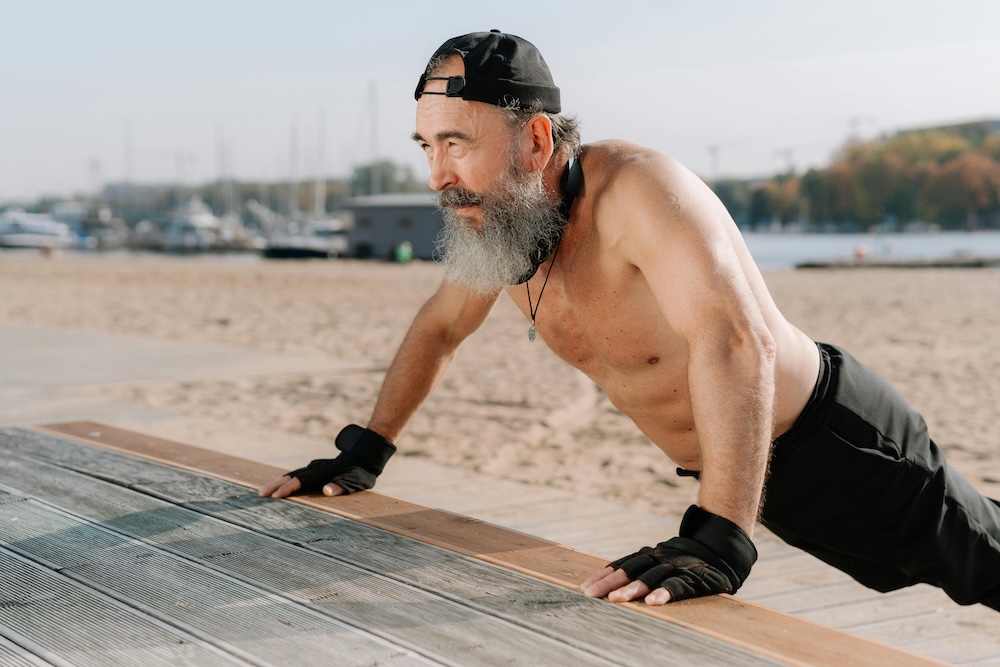
A Direct Look at Muscle, Bone, and What Can Be Done
This presentation offers evidence-based, scientifically-grounded understanding of age-related muscle and bone loss that moves beyond fear and conventional advice to reveal actionable biochemical insights.
What You'll Discover:
- Why the body loses muscle mass and bone density with age, and whether it is truly inevitable
- Why maintaining muscle mass and bone density is the most important determiner of health in old age
- The four specific biochemical mechanisms driving age-related decline: hormonal shifts, mitochondrial dysfunction, chronic inflammation, and anabolic resistance
- How muscle mass has emerged as a stronger predictor of mortality than traditional cardiovascular markers
- The essential biomarkers that reveal biochemical vulnerabilities associated with accelerated muscle and bone loss
- How anabolic signaling, inflammatory balance, and mitochondrial function interact to determine strength at any age
Live Webinar Details
Exclusive for Live Attendees
Live-Attendee Giveaway!
Join us LIVE for a chance to win an exclusive 30-minute discovery call with Dr. Goodenowe. One lucky attendee will be selected at random towards the end of the webinar. Disclaimer: This is a purely educational conversation, not intended to diagnose or treat any disease.
IT'S GOING TO BE A LECTURE YOU WON'T WANT TO MISS
Why Attend This Live Webinar?
- Direct science on muscle and bone loss and what the research actually shows about aging and strength
- Live Q&A with Dr. Goodenowe on biochemistry, longevity, and the truth about muscle and bone decline
- Exclusive research insights on biochemical approaches to building muscle and bone at any age
- Cutting-edge understanding of why muscle mass predicts longevity better than cholesterol
- Evidence-based strategies for those concerned about frailty, bone fractures, or age-related strength loss
- Clarity beyond fear - understanding the biochemical mechanisms that actually determine whether the body builds or breaks down

Don't Miss This Groundbreaking Presentation
Whether concerned about personal muscle or bone health, caring for an aging parent, or seeking to understand this topic beyond the headlines, this presentation provides direct scientific insights backed by decades of biochemical research.
Dr. Goodenowe will break down the biochemistry of aging and strength in a way that everyone can understand, and reveal why the decline most people accept as inevitable is, in fact, a biochemical process that can be addressed.
GROUNDBREAKING RESEARCH REVEALED
What People Are Saying About Dr. Goodenowe's Work
Dr. Goodenowe's research has completely changed how we understand disease at the biochemical level. His scientific approach provides hope grounded in real science, not speculation.
Finally, someone who explains the mechanisms behind disease in a way that makes sense and empowers us to think differently about health.
I am an Apollo Health Coach with a background in Bio/chem, and when I listened to Dr. Goodenowe's research, I was fascinated, intrigued and blown away. My heart beats for science, and his work has started to 'hang together' in ways that make real sense.
Dr. Goodenowe's approach to biochemistry is revolutionary. He doesn't just talk about treating disease—he addresses the underlying mechanisms that can make a real difference in cellular health.
The Science of Understanding Starts Here
Join hundreds discovering how to address age-related muscle and bone decline through biochemical understanding—moving beyond the myth of inevitability to actionable science.
MARCH 4TH, 4PM PACIFIC
This event is presented by Perpetual Health in partnership with Prodrome Sciences. Dr. Goodenowe’s research-based insights are grounded in peer-reviewed science and decades of biochemical research.
This presentation is for educational purposes only and not intended as medical advice.
Consult with qualified healthcare professionals regarding any health concerns, supplement decisions, or treatment decisions. Individual health conditions and responses to biochemical interventions should be discussed with appropriate medical professionals in the context of comprehensive health assessment.